
Fundraising CRM for Founders: The Relationship-Led Playbook
Early-stage fundraising is not a sales process. There is no cold list you can work through at volume. At the seed and Series A stages, venture capital decisions are built on trust, and trust travels through networks. The investor who takes your meeting is almost always the investor who heard about you from someone they already trust.
That is the foundation of relationship-led fundraising: use your team's existing connections to find warm paths to target investors, manage each introduction carefully, and track every conversation in a fundraising CRM that keeps your team aligned from first contact to close.
This playbook covers the full workflow: how to map your investor connections, how to ask for warm introductions, how to prepare for first meetings, and how to maintain investor relationships between conversations. For founders raising seed through Series A.
Why warm introductions move venture capital rounds
Research from OpenVC on warm introduction outperformance shows that referral-sourced deals convert at significantly higher rates than cold outreach at every stage of the venture funnel. The reason is not mysterious. At early stage there is limited hard data. A credible founder vouches for you; a respected operator forwards your note; a partner hears your name twice in the same week from different sources. These signals carry weight that a cold email cannot manufacture.
Warm introductions work because they borrow trust. The introducer puts their reputation behind the connection. That implicit endorsement changes the investor's prior before the meeting even starts. You are no longer an unknown quantity. You are someone worth a serious conversation.
This does not mean cold outreach never works. A well-researched, specific cold email can absolutely land a meeting, particularly outside major startup hubs where warm paths are harder to build. But warm introductions compress the timeline and improve the odds. The practical question is not warm versus cold. It is: how do you find warm paths systematically, and how do you manage them without letting anything fall through?
How to map your team's investor connections
The first step is understanding what relationship context your team already has. Most founding teams have broader networks than they realize. The connections are scattered across individual inboxes, LinkedIn connections, and personal memory. A fundraising CRM makes them visible and shared.
For each target investor, the question is: who on the team knows this person, or knows someone who does? Look one and two degrees out. A portfolio founder at a fund your co-founder knows from a previous company. An advisor who ran a company the partner backed. A mutual connection who has credibility with that particular investor.
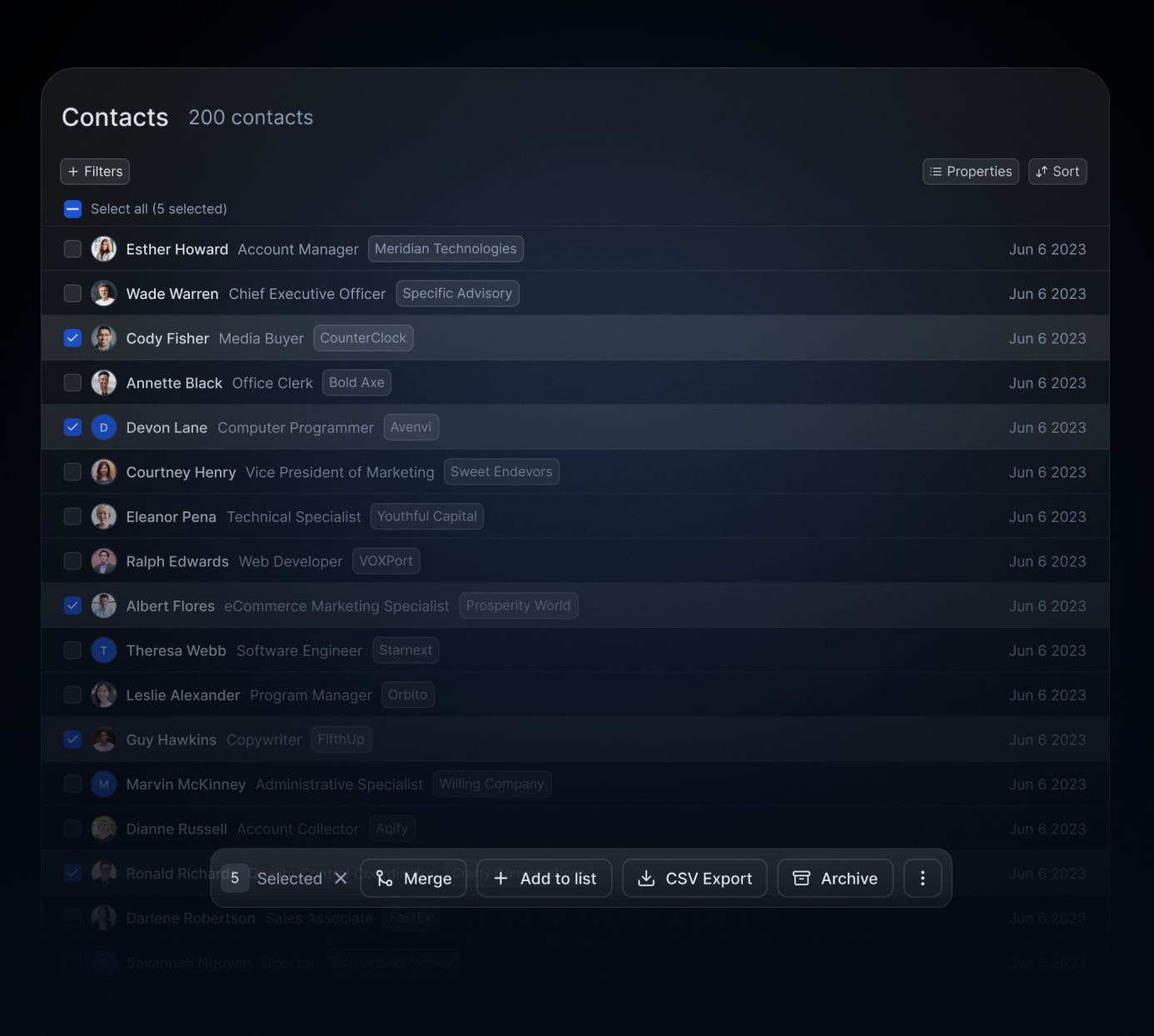
In Rolodex, open the investor's contact profile and see who on the team has a history with them. Filter the broader network by firm, geography, or portfolio overlap. Add a note explaining the path you are considering ("choosing route via Sarah, she is a portfolio founder and close to this partnership") so your team can see the rationale before you make the ask.
The goal is not just to find a path. It is to find the right path. A warm introduction from someone the investor trusts deeply is worth significantly more than an introduction from someone they barely know. Quality of the connector matters more than speed of the ask.
How to manage the introduction request
Warm introductions work when they are easy on the introducer. The ask should be short, specific, and give the introducer everything they need to forward it without effort.
A good introduction request is three to five sentences: the reason you are reaching out now, why this investor specifically, what you are building in one clear sentence, and a forwardable note the introducer can paste directly. The goal is to make the meeting happen, not to pitch the full company. Asking for a first conversation is the right ask. Asking for a term sheet is not.
Double opt-in is the standard approach: you ask the introducer to check whether the investor is open to a connection before making the formal introduction. This respects the investor's time and the introducer's relationship. If the investor says yes, the introduction lands in a warmer context.
Track every introduction request in your investor CRM with a named owner and a clear status. A simple board works well: Requested, Intro Sent, Meeting, Outcome. Each introduction has one person responsible for following up, with light service-level agreements. Reply to the introducer within one business day. Propose meeting times within 24 hours of the introduction being made. Thank the introducer within 24 hours of the meeting. These are small gestures that protect long-term relationships.
Before or shortly after the introduction, send a one-page investor brief. Not a data room. A skimmable document that earns a 20-minute meeting: the problem shift that makes your wedge timely, what you do, the traction that proves it is working, a brief on the business model, and the ask. According to DocSend's research on investor behavior, partners spend roughly two to three minutes reviewing a deck. Design for that window, not for a deep read.
How to prepare for the first investor meeting
A first meeting is not a pitch. It is a conversation that earns a second meeting. The investor is evaluating whether this is a company and team worth spending more time with. Your job is to make the answer clearly yes within the first few minutes.
Sequoia's public guidance on first meetings is directionally useful here: earn attention in the opening minutes with your sharpest signal, then get interactive. That means leading with what changed in the market to make your wedge relevant now, what you have built and why it is working, and the data that proves traction. Then ask questions. What do they think? What would change their mind? What does the path to a decision look like on their end?
Before every meeting, pull the relationship context from your investor CRM. What has your team already discussed with this person? What did the introducer share about them? What are their known investment theses? Two minutes of preparation before a meeting is worth more than 20 minutes of generic pitch polish.
Keep notes during and immediately after the meeting: what changed in your understanding, what the investor seemed most interested in, what they asked about, what they said the next step was. Log this in the investor's contact record so everyone on the team has the same picture. These notes become the basis for every follow-up in the process.
How to track investor conversations in a fundraising CRM
Fundraising breaks in the handoffs. An investor goes quiet and nobody follows up because everyone assumed someone else was on it. An introducer never gets thanked because the meeting was logged in someone's personal notes. A warm investor starts going cold because the update cadence slipped.
A fundraising CRM prevents this. Not a complex system. A shared view of every investor contact, every introduction request and its current status, every meeting and its outcome, and every follow-up that is due. Rolodex handles this with a combination of a Board View for the introduction pipeline, contact notes for the meeting record, and Keep in Touch cadences for staying warm with investors who are leaning in.
Keep the board simple. Four stages: Requested, Intro Sent, Meeting, Outcome. One owner per card. Every card moves based on what actually happened, not based on optimism. This gives the whole founding team a live picture of where the round is without requiring a meeting to debrief.
After each meeting, capture what you are calling the "current truth": what changed, what the investor's actual signal was, what the agreed next step is, and when you are following up. Attach any deck versions or reference material to the contact record so it is always findable without searching Slack or email threads.
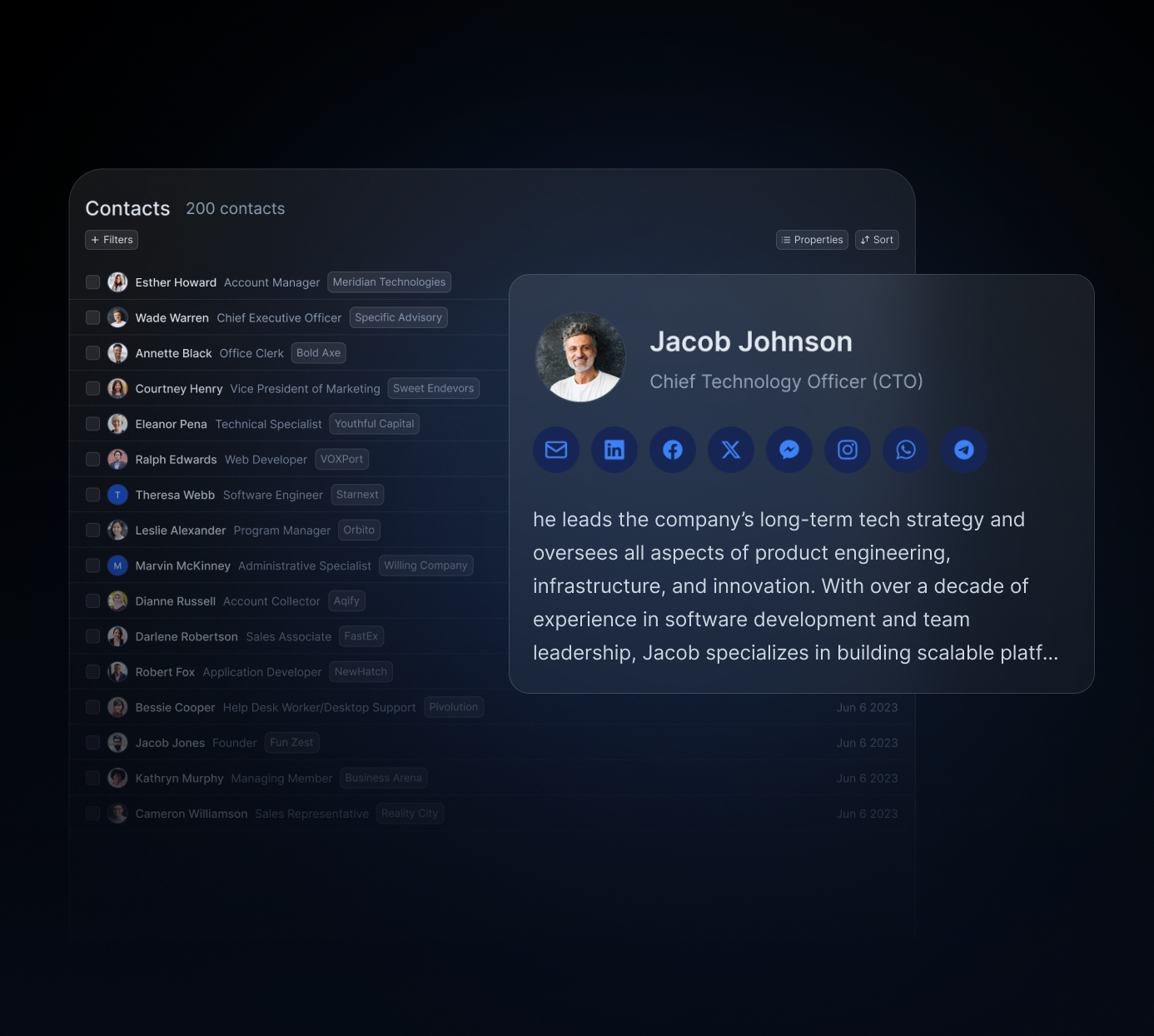
For investors who are leaning in and moving toward a term sheet, use buying signals like title changes and role moves to stay aware of any firm or team changes that affect the relationship. A partner changing firms mid-process is information you want in real time.
Keeping investor relationships warm between conversations
Investors who do not invest now may invest in the next round. Investors who pass with good feedback are worth staying connected with. The warm relationship you build during a raise is an asset that extends well beyond the round.
Staying in touch with investors over time requires the same structure as any relationship maintenance: a defined list of people worth keeping warm, a sense of how active each relationship is, and a lightweight cadence for reaching out before things go quiet.
For investors who are actively interested during a raise, a monthly update is the right cadence: key wins since the last conversation, a named blocker you are solving, and one question that invites a response. Short. Specific. Designed to maintain momentum without requiring a full meeting.
For investors who passed but stayed friendly, a quarterly check-in is enough. Share a milestone that moves their prior. Note a portfolio company that might benefit from an introduction. The goal is to stay in the relationship, not to re-pitch every quarter.
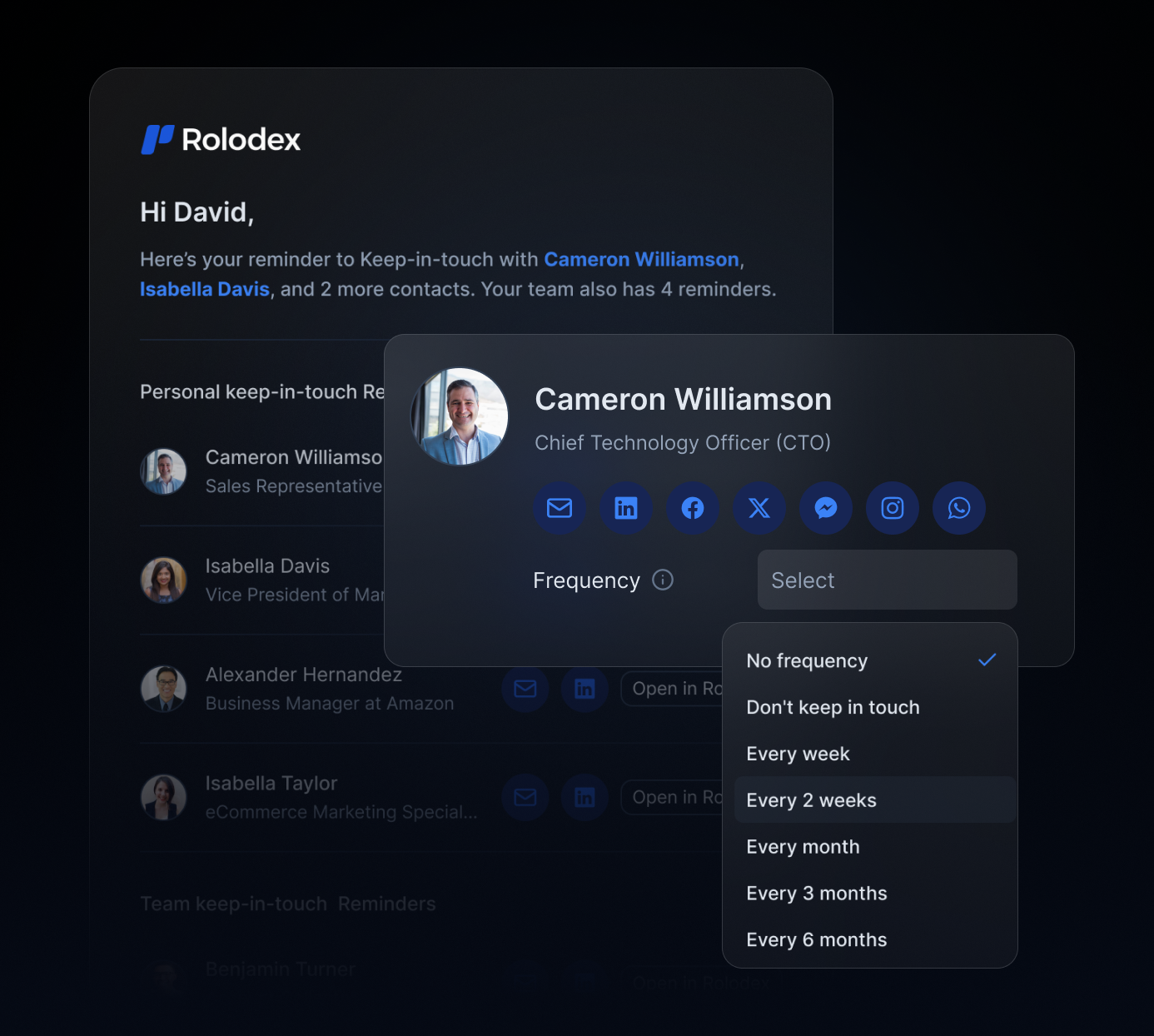
Rolodex's Keep in Touch feature supports this. Set a cadence per investor contact and it surfaces who needs attention each week without requiring you to track it manually. Combined with the introduction board, this gives you a complete picture of your fundraising relationship management in one place.
Close the loop with introducers after every meeting, whether it goes well or not. Tell them what happened, thank them specifically for the connection, and update them on progress if it feels appropriate. Introducers who feel used once do not introduce again. Introducers who feel respected become long-term connectors.
Cold outreach vs. warm paths: when to use each
A clean, specific cold email can work. Y Combinator's guidance on investor cold outreach is worth reading: short message, specific fund fit, clear ask, no attachments in the first email. The bar is high because investors receive high volumes of cold outreach, but a well-targeted note that demonstrates you have done your homework will get read.
Cold outreach is most useful when you are outside the networks where warm paths are naturally available, when you are targeting investors in a category where you have no existing connections, or when the investor has explicitly said they welcome cold introductions.
Warm introductions are preferable when you can get them because the conversion rate difference is substantial. They are also better for the relationship: a shared connection creates context and accountability that a cold email cannot replicate.
In practice, most raises use both. Work your warm network as the primary motion and use cold outreach to supplement coverage in areas where you have no natural paths. Track both in the same fundraising CRM so nothing gets duplicated or missed.
The takeaway
Relationship-led fundraising is systematic, not opportunistic. The teams who close rounds efficiently are not the ones with the most connections. They are the ones who understand what connections they have, who move quickly when an introduction opportunity appears, and who maintain investor relationships carefully between conversations.
The infrastructure for this does not need to be complex. A shared investor CRM, a simple introduction board, a clear note-taking habit after every meeting, and a lightweight outreach cadence for staying warm. That is relationship intelligence applied to fundraising.
Start organizing your investor relationships with Rolodex, free to start
Book a demo to see how the fundraising CRM workflow works in practice